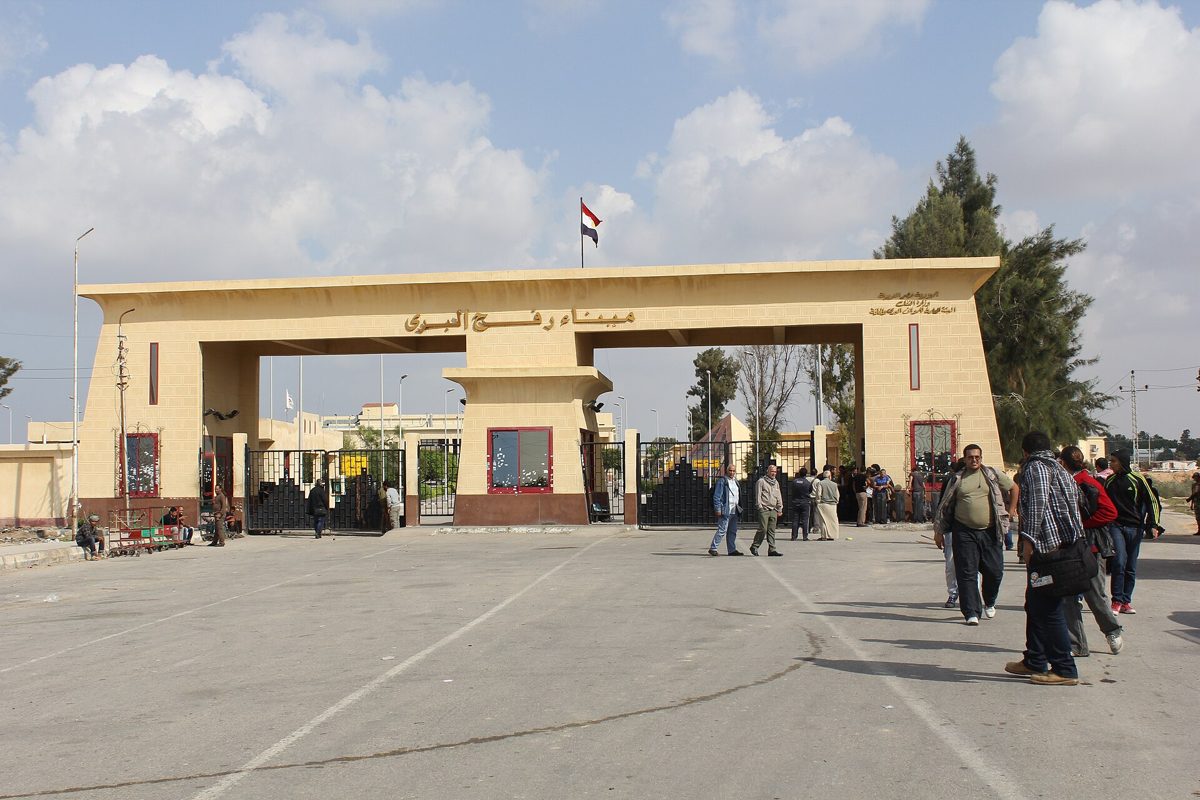

After 5.5 years in captivity, on 11th October Israel and Hamas had finally signed the agreement on the prisoners swap deal to exchange the captured Israeli soldier Gilad Shalit for more than 1,000 Palestinian prisoners. The swap itself took place one week later.
The deal was intensively covered by international media, followed by mounds of commentaries analyzing the timing of the deal and the winners & losers of the deal. In the aftermath of Shalit deal, it might be interesting to analyze the deal using the classic prism of strategic planning: a SWOT analysis, which evaluates the strengths, weaknesses (in the foreseeable future), opportunities and threats (in the long run) related to the deal. The analysis hereto will naturally focus on the three main actors behind the deal: Israel, Hamas and Egypt.
Israel
Strengths: the deal has ignited a substantial sense of unity amongst the Israeli public, a public highly divided along socio-economic, cultural, religious and political lines. It has also contributed to the efforts of re-stabilizing the shaky relationship with the Egyptian regime.
Weaknesses: many Palestinians see the deal as a proof that Israel understands only the language of force. This conclusion is a double jeopardy to Abu Mazen and the pro-negotiation Fatah movement: at first, the political base of Fatah at the West Bank will be overshadowed by the Hamas achievement. Later on, Fatah leaders might also look for a victory of their own by capturing another soldier.
Opportunities: in summer 2011 Israel was overwhelmed by mass demonstrations that called for social justice and aimed at shaking the current political-economic establishment. On the long run, Shalit deal might erode the popular support base of the protest leaders, thus buying political quiet.
Threats: amongst the released prisoners, many are hard-line terrorists who were sentenced for dozens of years due to direct involvement in planning and executing terror attacks that killed hundreds of Israelis. Based on the experience of former prisoners' swaps between Israel and its foes, some of them will kill again.
Hamas
Strengths: Shalit deal is expected to grant substantial political boost to Hamas in the Palestinian territories, mainly at the West Bank. Since the breakup between Fatah and Hamas in 2007, Gaza Strip and the West Bank function as two separate political entities. The attribution of the swap to Hamas will enable it to rebuild its eroded power base at the West Bank.
Weaknesses: Hamas has not accomplished its mission in full, as several high rank prisoners were not included in the deal, though Hamas demanded their release at first. Since the prisoners’ issue enjoys high profile among Palestinian media & public, it should be expected that Hamas will have to deal with domestic claims against the deal.
Opportunities: Hamas has not changed its ways: Ideologically it still calls for the destruction of Israel, and it is defined as a terror organization by many western states. The negotiations that led to the deal, as well as the involvement of several regional & European actors (Germany, Egypt, Turkey and Qatar) helped building diplomatic credentials for Hamas, contributing to its efforts to be conceived as a legitimate regional actor.
Threats: Hamas openly declares that it will capture more Israeli soldiers. These hasty declarations might cause future trouble to Hamas due to 3 reasons: a. Israel will stand much more in guard to prevent future Israeli captives. b. Israel will enjoy broad legitimacy to attack Hamas once again (as it did in 2008) if a kidnap action does occur. c. Israel might even prefer to launch a preventive attack on Hamas to deter it from taking any effort to execute it plans.
Egypt
Strengths: after the fall of the Mubarak regime and the internal political turmoil that followed, the new temporary regime was seeking for opportunities to reestablish Egypt as an important regional actor. The crucial role fulfilled by senior Egyptian intelligence officers in closing the deal is certainly an important step in Egypt’s efforts in this direction.
Weaknesses: there is no immediate outcome derived directly from Shalit deal that might pose a threat to Egypt.
Opportunities: Mubarak was known for his pro-Israel, anti-Hamas policy which contributed to the hostility against his regime among Egyptian people. By portraying itself as a fair mediator in Shalit deal, the current regime hopes to gain popular support in order to stabilize the domestic political system.
Threats: due to the uprising in Syria, Hamas leadership will leave soon from Damascus to Cairo. This, together with the improving relationship with Hamas leaders in Gaza in the context of Shalit deal, might deter the US, Europe and Israel from deepening their relationship with Egypt in the long run. Moreover, Hamas presence in Cairo might give support to local Islamist political movements' such as the Muslim Brothers.
It has been two years since I met with Hamas officials and saw the list of the prisoners they wanted Israel to release in exchange for Shalit. Back then Hamas and Fatah could not reach an agreement regarding this list, and Israel was not willing to release “heavy” prisoners. When Israeli leaders realized that the Palestinians don’t have one acceptable list, they have decided to wait.
This agreement that finally brought to the release of Shalit shows that Hamas doesn’t want the destruction of Israel, but wants Israel to see Hamas as a legitimate partner.