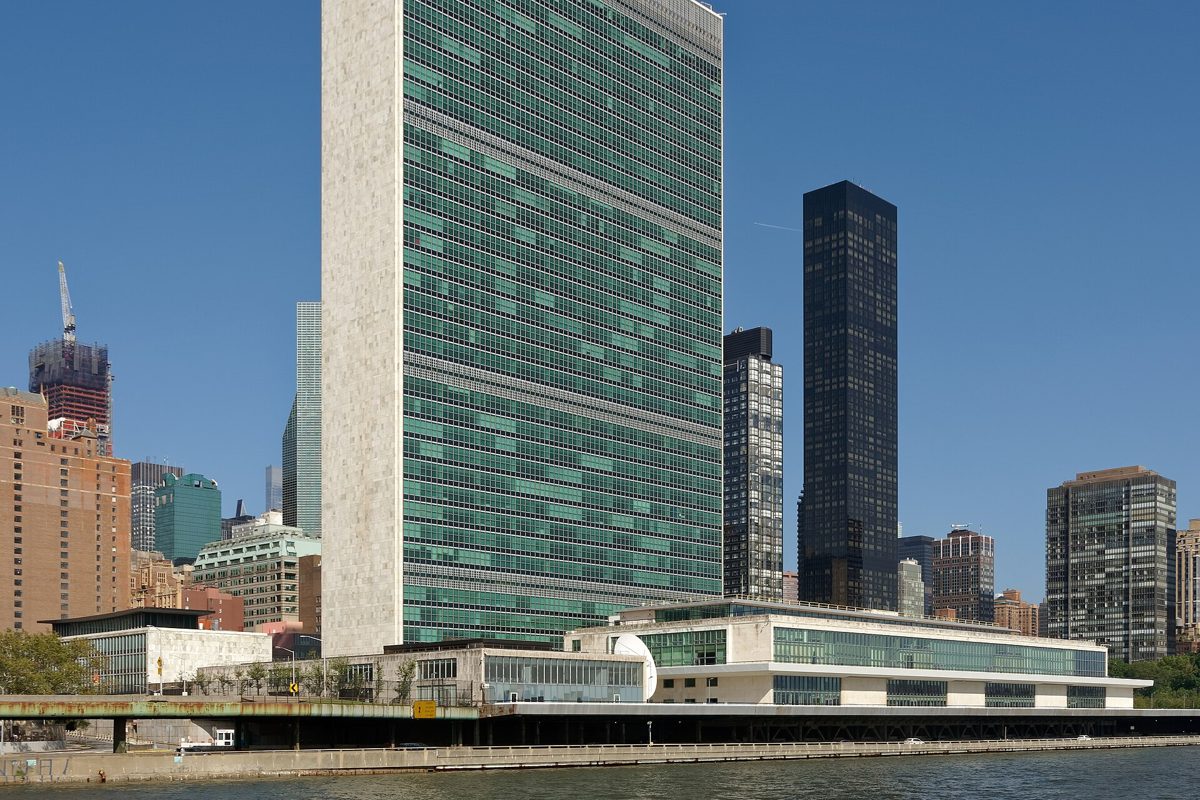

The basic dilemma of the UN concerning its role as a mediator in conflict areas is whether international intervention in regional conflicts is positive or negative. Researchers describe this dilemma as sovereignty versus responsibility: where is the borderline between a legitimate act of international organizations that show their commitment to human values by protecting weak populations, and a harsh intervention in the internal policies of a sovereign state? This complex issue cannot be isolated from the political weight of certain regional conflicts on the international arena. In the modern state system, the raison d'état is based on interest and pragmatism, not on all-encompassing ideologies or religious faith. This is why the Middle East conflict draws more worldwide attention than its concrete "weight" in terms of number of states involved, security budgets, and duration of conflict and even number of casualties. In short, the seismographs of global economy and global political array are much more sensitive to a stone thrown in Jerusalem than a village burned to the ground in Nigeria.
At times, Israel tended to be sensitive to international intervention in the Israeli-Palestinian conflict. But in historical perspective, both sides always respected international intervention; the level of trust between the Israelis and the Palestinians had many times reached such an ebb that blocked them from agreeing on the same mediator. In this context, the UN has always been perceived in the region as a weak, irrelevant body. Due to its complex political structure, combined with regional circumstances, the UN has so far failed in functioning as a real international mediator: it did not acquire Israel's trust; and it did not cause strategic change in the political situation for the Palestinians.
As I am writing these words, the UN Secretary-General Ban Ki-moon just ended his visit to the region: Israel, the West Bank and Gaza Strip. Cynics and critics would probably claim that Mr. Ban will declare several statements about the need for mutual trust and peace, and then will fly back to the UN headquarters. But I think they are missing the point. The UN is as relevant as ever due to two converging processes:
- The deterioration in the region into a "dialogue of the deaf" will, sooner or later, lead them to the conclusion that they must rely on a neutral international body; an organization that has no self interest except from realizing the goals it was established upon. The current mediators, be it the US, Turkey or Egypt, all have their own interests, that might obscure the right path to achieve peace in the region.
- The unique biography of Mr. Ban. Coming from South Korea, Ban has served his country many years as a diplomat and a statesman in South Korea and abroad. In the last two decades, Mr. Ban was deeply involved in the fragile dialogue between South Korea and North Korea, both as a senior official and as the Foreign Minister.
The Korean problem is still far from resolved; but this is exactly where Mr. Ban can bring added value to the Middle East: his experience has equipped him with patience, pragmatism, understanding to the back-and-forth tendency of negotiations; and most of all, the ability to bridge deep mistrust between hostile nations holding fierce ideological stances, by building a dialogical mechanism, step by step.